If you are looking for a Dressmaker cozy game, the core answer is yes: it is a relaxed crafting simulation inspired by real dressmaking. You choose fabric, arrange and cut patterns, sew the garment, decorate it, and hand the finished dress to townspeople—or display a design in your shop window.
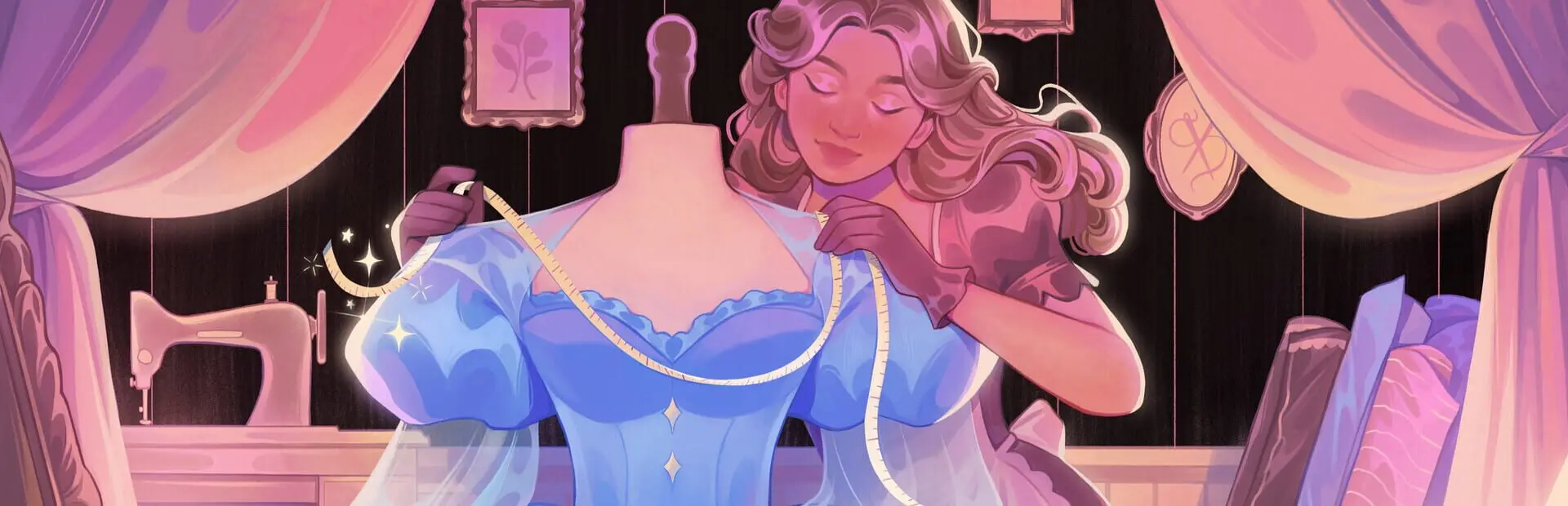
Why this is a cozy dressmaking game
The game turns dressmaking into a hands-on creative activity rather than a simple dress-up menu. The official description focuses on choosing materials, controlling how each panel is cut, feeding fabric through a sewing machine, and adding decorations wherever you like. That combination makes the main loop tactile, deliberate, and easy to approach at your own pace.
The setting also supports the cozy format. Customers come from a whole town and ask for custom clothing for important events or for their own tastes. You can try to satisfy those requests, or make choices that sabotage the result, giving the crafting process a playful consequence without changing its basic focus on designing and sewing.
There is also a small companion-like detail in the official description: you can pet the kitty. It does not replace the sewing systems, but it fits the gentle, everyday atmosphere that players usually expect from a cozy game.
What you do from fabric to finished dress
The work is presented as a series of connected decisions. Each step affects what you make next, so the appeal comes from seeing an idea move from a sketch and a piece of cloth into a completed garment.
| Stage | What the materials support |
|---|---|
| Choose fabric | Select from cotton, linen, wool, silk, velvet, and other available fabric choices. |
| Plan the design | Use a sketchbook to work on the dress design, colours, fabric samples, and appliqué. |
| Cut the pattern | Arrange the pattern on the fabric, then cut the pieces out. |
| Preview the fit | Check the planned dress on a mannequin before sewing it together. |
| Sew the garment | Feed the fabric through the sewing machine to stitch the pieces together. |
| Add details | Place buttons, bows, appliqué, lace trims, and other accessories. |
| Deliver or display | Give the dress to a customer, or put a finished design in the shop window to sell it off the rack. |
This structure gives the game more texture than choosing a preset outfit. You decide what fabric each panel uses, how the pattern is arranged, and which decorations belong on the finished piece. The official description says that the final dress reflects the way the fabric is arranged and cut, including whether the pattern follows the grain or is cut on the bias.
Fabric choice and pattern placement
Fabric is one of the first meaningful choices in the workshop. The listed materials include cotton, linen, wool, silk, and velvet, so the starting point is not limited to one generic cloth. Choosing between those options gives the design process a material element before the pattern is even placed.
Pattern placement is equally important to the stated concept. The official store description says that you have control over how the fabric is arranged and cut for each garment panel. It specifically calls out alignment with the grain and cutting on the bias, which means the game is inspired by real sewing decisions rather than treating the fabric as a flat colour picker.
That does not mean every result needs to be technically perfect. The point of the sandbox is that you can experiment with the way a dress is assembled, then see those choices represented in the garment. For a first attempt, a sensible approach is to think about the customer’s request, choose a fabric that fits the intended look, and use the mannequin preview before committing to the sewing stage.
Sketchbook, colour, and decoration
The sketchbook is where the visual direction comes together. According to the official information, you can design and colour the dress there, add fabric samples, and work with appliqué before moving on to cutting and sewing. That gives you a planning space for exploring an idea instead of making every decision at the machine.
Decoration remains open-ended after the main garment is assembled. The supported options include:
- Buttons and bows for small focal details.
- Appliqué for added shapes or motifs.
- Lace trims for a more finished edge or layered look.
- Other accessories placed where you want them.
The description emphasizes creative freedom in where these elements go. In practice, that makes decoration a useful final pass: you can keep a design simple, add a few accents, or build a deliberately unusual outfit for a customer who has not treated your character well. The important supported fact is the freedom to place these details, not a fixed list of required combinations.
Customers, requests, and the shop window
The town gives the sewing loop a reason to continue. Customers visit the shop hoping for custom-made dresses tailored to important events and individual tastes. The source material also describes collecting measurements and responding to requests, with an example of a librarian looking for sensible work clothes.
That customer-facing structure creates two different ways to use your finished work. You can make a dress specifically for the person in front of you and turn it in to gain reputation and coin. Or you can display one of your own designs in the shop window and sell it as a ready-made dress off the rack.
The game therefore supports both response and experimentation. A requested garment gives you a brief to work from, while a shop-window design gives you room to make something for your own idea. The available descriptions do not establish a score formula or a fixed customer progression, so the reliable takeaway is the creative choice between tailored orders and pre-made designs.
A good fit for players who like calm creative games
This is a natural match for players who enjoy making things step by step. The process moves through choosing materials, sketching, cutting, previewing, sewing, and decorating, with no need to reduce the activity to a single button press. The real-dressmaking inspiration also gives the choices a physical logic: fabric is arranged, patterns are cut, pieces are stitched, and details are attached.
It may appeal especially to players who like:
- Creative sandboxes where there is more than one attractive result.
- Crafting routines with a clear beginning, middle, and finished object.
- Fashion design based on fabric, panels, colour, and accessories.
- Chill indie games with a small shop and a town of customers.
- Experimentation, including the option to satisfy or sabotage a request.
The available material does not promise every feature associated with larger life simulations, such as farming, decorating a house, or relationship systems. Its supported identity is narrower and clearer: a cozy simulation centred on making dresses and serving customers.
Prototype access and full-version context
The official itch.io page describes the available release as a prototype. It says the prototype was initially made by Free Lives in about three weeks, followed by another month or two of additional work, and openly notes that some seams and ideas remained unfinished. The same page says that a full version is being worked on and links to its Steam wishlist.
That distinction matters when deciding what to expect. The prototype is useful for trying the central idea of selecting designs, cutting fabric, sewing garments, and serving customers, but the official page does not present it as the final, complete edition. The full version is described as a separate work in progress, so players should use the Steam page for the current availability details of that version.
The official site also includes a Mac note. Because the game is not notarized, macOS may show a warning that it could be malicious; the listed workaround is to open System Settings, go to Privacy & Security, and use Open Anyway to confirm that you intend to launch it. Follow the platform’s warning carefully and only proceed when you are confident the download came from the intended official source.
Bottom line
This cozy crafting game is built around the satisfying middle of dressmaking: choose the cloth, think through the pattern, cut the pieces, sew them on a machine, and finish the result with personal details. Customers, reputation, coin, and the shop window give those designs a purpose, while the option to satisfy or sabotage requests keeps the tone playful.
If you want a focused fashion-making sandbox rather than a broad life sim, the supported information points to a clear starting place: try the prototype on itch.io, then use the official Steam page for the full-version wishlist and current release information.